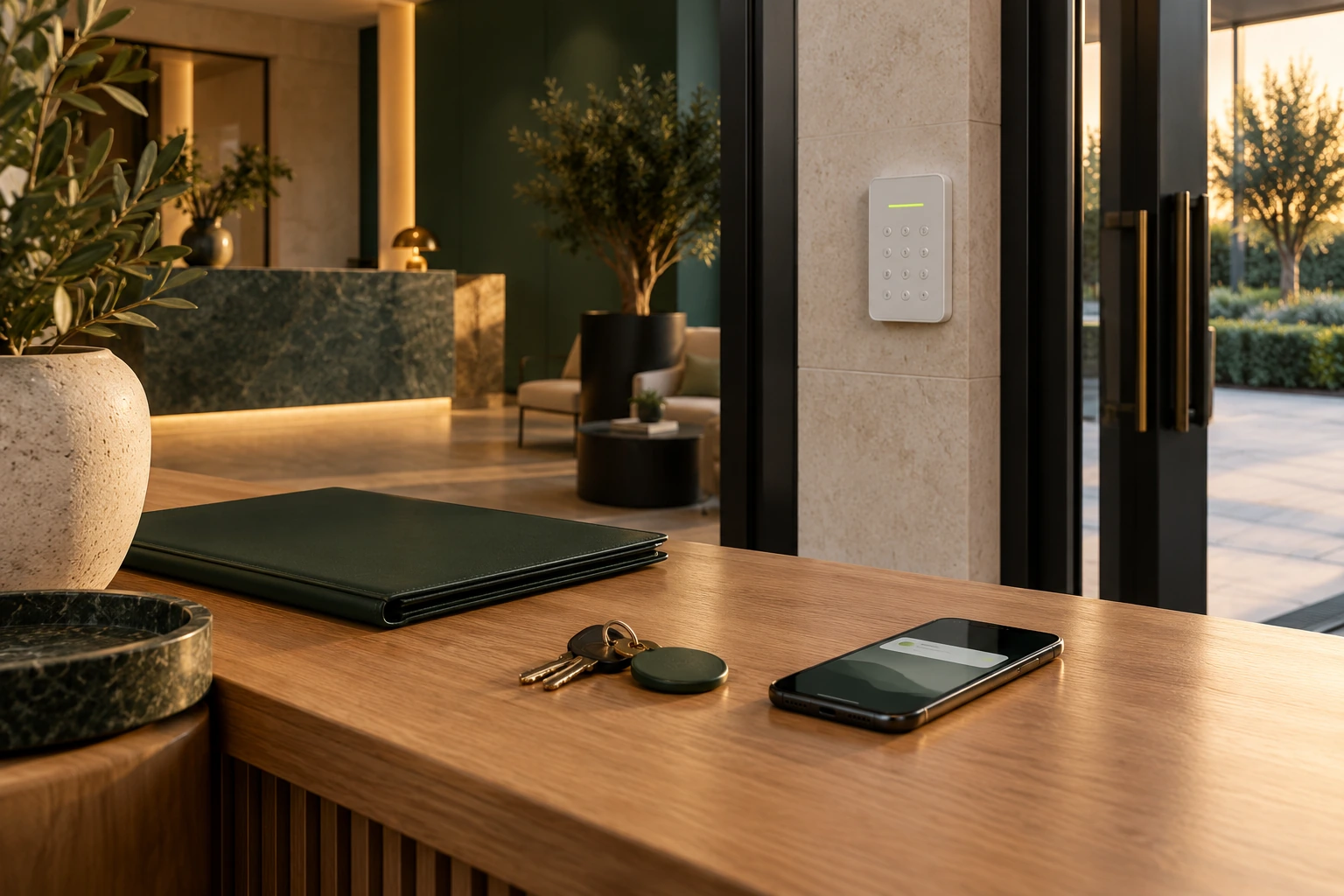
App alerts and professional monitoring serve different roles
An app can notify an authorised user and help them check or operate supported alarm functions. Professional monitoring sends signals to an Alarm Receiving Centre, where operators follow an agreed response procedure.
An app notification does not by itself create a police-response arrangement. Decide who needs to receive an event, how it will be assessed and who is able to attend the premises.
How a monitored response is organised
The system detects an event and communicates it through the specified signalling arrangement. The receiving centre handles the information according to the agreed procedures, which may include contacting keyholders and escalating qualifying events.
The design needs to consider the detection system and communications as well as the people involved. Correct contact details, clear responsibilities and suitable user training are part of making the arrangement work.
Police response has eligibility requirements
A monitored alarm is not automatically entitled to police response. The applicable police security systems policy, system compliance, certification and relevant Unique Reference Number arrangements need to be satisfied. Qualifying events are then handled under the applicable response procedures.
Not every activation results in police attendance. Police availability and policy apply, and response status can be affected by false alarms or other failures to meet requirements. No installer should promise guaranteed attendance.
Intruder and hold-up protection need the right design
Intruder detection and hold-up alarms protect against different situations and have distinct operational requirements. The choice of equipment, location of devices and response arrangements must match the intended use.
For commercial premises, insurers may also specify a system grade, monitoring or other conditions. Share those requirements before the installation is designed, so they can be considered alongside the building and the risks.
Not every policy requires police response. An insurer may ask for monitoring with keyholder notification, or for a system installed to PD 6662 and maintained in accordance with the applicable requirements. The wording of your own policy determines what is needed; monitoring, police response and certification should be considered separately.
As an SSAIB-certificated installer, Digilec provides an SSAIB Certificate of Conformity for its certified alarm installations. This documents conformity with the stated requirements and can support the evidence requested by your insurer. We also provide planned servicing and maintenance records.
Why maintenance and everyday use matter
Faults, poor setting routines and outdated keyholder records can undermine an otherwise good installation. Planned servicing, appropriate permissions and a clear process for staff changes help keep the system useful.
If you are changing alarm company, the existing monitoring and police arrangements need to be reviewed as part of the takeover. A change should be coordinated rather than assumed to transfer automatically.
Talk to Digilec about the complete arrangement
Digilec is SSAIB certificated and can provide monitored intruder and hold-up alarm systems, with police-response arrangements where the relevant conditions are met. We design, install and maintain systems for commercial and residential premises.
Tell us about your property, current alarm and any insurance requirements. We will explain the suitable options and the responsibilities involved in plain language.