Occupied commercial premises
Offices, shops and education settings can benefit from a carefully planned installation with less new field cabling and coordinated access to working areas.
Wireless fire detection with a modern control experience—and the option to bring compatible intrusion and video systems into the same Ajax environment.

A finished hotel corridor, a busy office or a building with sensitive interiors can make new fire alarm cabling a significant part of the project. Ajax EN54 offers a wireless alternative: a dedicated fire control platform with compatible detectors, call points and warning devices.
For the customer, the appeal is practical. Less field cabling can mean less disturbance to the building, while a clear touchscreen and connected management tools help authorised people understand the system. Digilec assesses, installs and maintains these solutions around the site’s actual requirements.
The EN54 Fire Hub is the control and indicating equipment at the centre of the system. The EN54 range includes smoke and heat detection, sounders, visual alarm devices and interface options, with suitable manual call points forming part of the selected installation.
EN 54 certification relates to the relevant product requirements. A compliant installation also depends on design, device selection, coverage, commissioning and maintenance. It is not achieved simply by choosing a product with EN54 in its name.
Ajax’s EN54 line should not be confused with adding domestic fire detectors to an ordinary intruder alarm hub. We select the dedicated equipment and compatible devices for the intended fire alarm design.
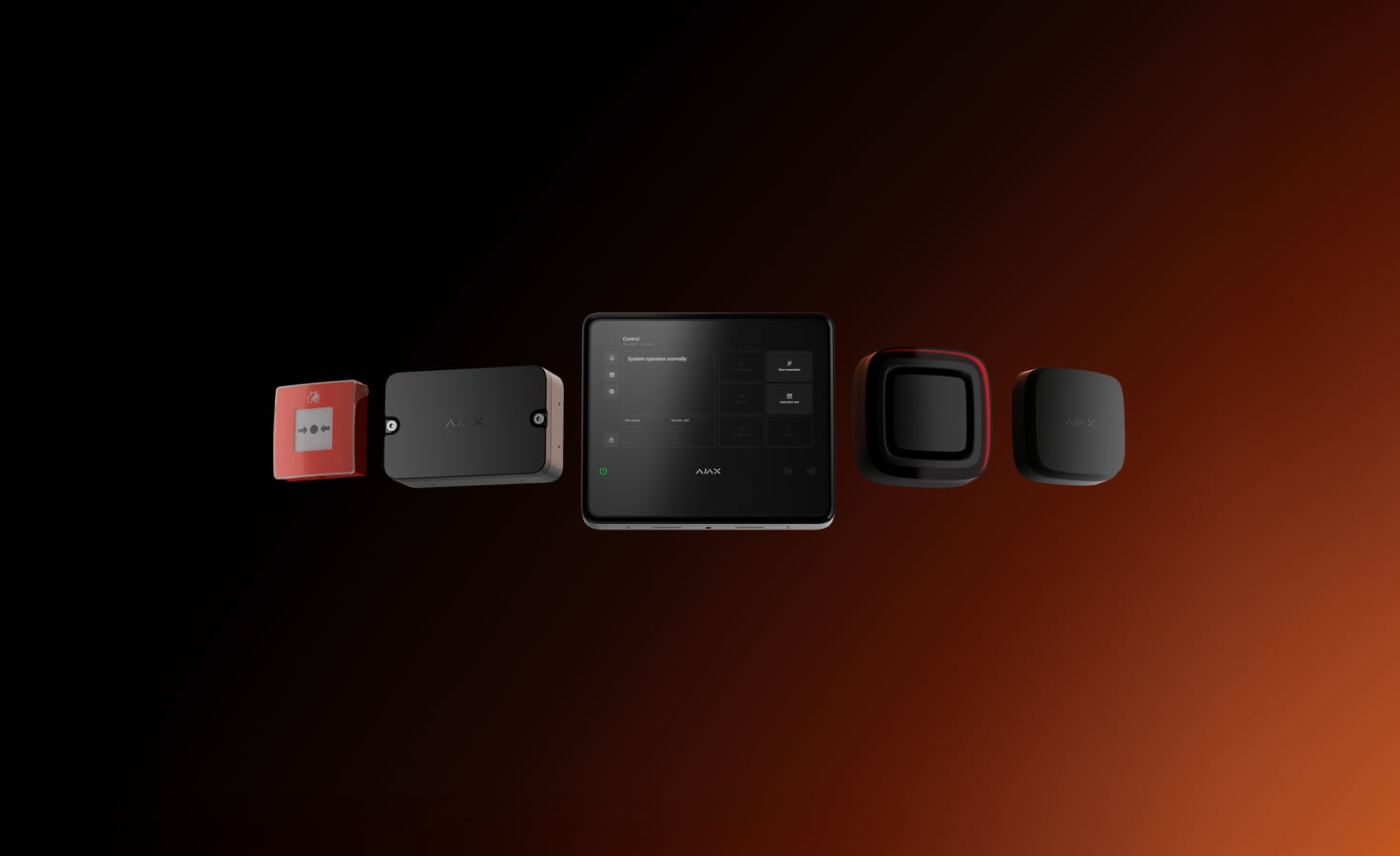
Compatible systems and authorised access, configured around the building.
Dedicated detection, warnings and local control, with fire events and status visible to authorised users.
The Fire Hub supports EN 50131 Grade 2 intrusion configurations. Equipment and the complete design must suit the risk.
Supported camera and NVR integration gives authorised users visual context alongside system events.
A facilities manager can have a more convenient view of events across compatible fire, intrusion and video equipment. Permissions, notifications and the selected monitoring arrangements should be designed around who needs to act.
Video can help authorised staff understand a situation, but it must not become a reason to delay the fire procedure or wait for a camera check before responding. App access is also distinct from professional alarm monitoring; any monitoring and response arrangements are agreed separately.
Explore intruder alarm solutions ↗Explore Ajax CCTV ↗Offices, shops and education settings can benefit from a carefully planned installation with less new field cabling and coordinated access to working areas.
Hotels, restaurants and character buildings may have finishes or operational constraints that make wireless detection particularly worth considering.
Where a panel-based system is specified, wireless equipment may suit the project. The required grade, coverage and evacuation arrangements must be established first.
Grade A describes a panel-based fire alarm arrangement with appropriate detection, alarm devices, control equipment and standby power. Category LD2 describes coverage of escape routes and specified higher-risk areas in a domestic-premises design.
These terms are relevant to certain large homes and multi-occupancy projects, but they are not a universal prescription for every HMO or block of flats. Individual dwellings and shared areas can have different requirements. We work from the agreed fire strategy, risk assessment and relevant BS 5839-6 requirements, rather than applying a standard package to every property.
Radio coverage, device positions, warning performance, power arrangements and any interfaces all need to be considered. The hub requires a suitable power supply, and some interfaces may need wiring. We check product compatibility and available features for the proposed configuration.
Once installed, the system needs a clear handover and a planned maintenance programme. Supported remote diagnostics can help with investigation, but they do not replace physical inspection and functional testing.
Arrange fire alarm maintenance ↗Get help with an existing system ↗Send us your site location, the type of building and what you need help with. If you have a fire alarm specification, floor plans or an existing service report, those are a useful starting point.